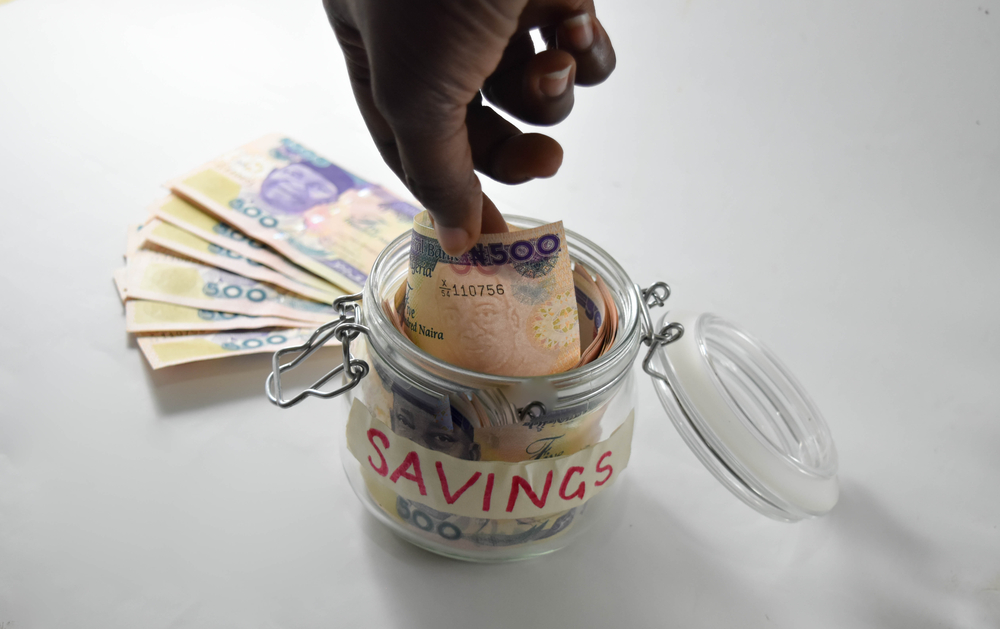


Most people think saving money is simple — just put money aside and you’re good. But there’s a reason why so many people with decent incomes still feel financially unstable: saving without structure is barely better than not saving at all. Understanding the right types of savings and where to keep your money can completely change your financial picture. In this article, we break it down into two parts — the account types that make your money work harder, and the saving categories that give every naira a purpose.
Types of Savings You Should Have
Part 1: Types of Savings Accounts
Not all savings accounts treat your money the same way. Where you keep your savings can be the difference between money that sits idle and money that quietly grows.
1. High-Yield Savings Accounts
A high-yield savings account earns significantly more interest than a traditional savings account. While a regular bank account might offer negligible returns, a high-yield account compounds your money meaningfully over time without requiring you to do anything extra.
This is exactly what Rank is built for. With Rank’s savings plan, you can earn up to 23% per annum on your savings — one of the most competitive rates in the market. That means your money doesn’t just sit there waiting; it actively grows while you go about your life. Whether you are building a safety net or saving toward a specific goal, a high-yield account is one of the smartest places to start.
Download the Rank app and set up a savings plan.
2. Certificates of Deposit (CDs)
A certificate of deposit is a savings option where you agree to leave your money untouched for a fixed period — three months, six months, a year or longer — in exchange for a guaranteed interest rate. The longer you commit, the higher the rate tends to be.
CDs work well for money you know you won’t need in the near term. They remove the temptation to dip into your savings while rewarding your patience with better returns. The trade-off is that withdrawing early usually comes with a penalty, so only lock in what you can genuinely leave alone.
3. Money Market Accounts
Money market accounts sit somewhere between a savings and a current account. They typically offer better interest than a regular savings account and often allow limited withdrawals, making them more flexible than CDs but not as liquid as an everyday account. They are a solid option for funds you want growing in the background while keeping some access open.
Part 2: Types of Savings Categories
Having the right account is only half the equation. You also need clarity on what you are saving for. Think of these as buckets — each one has a specific job, so your money is not just “saved,” it is purposeful.
4. Emergency Fund
An emergency fund is your financial safety net. It exists for the unexpected: a sudden job loss, a medical bill, a car breakdown, or any situation that demands cash you did not plan for. Without one, even a minor crisis can send your finances into disarray.
The widely recommended target is three to six months of living expenses. That can sound like a lot, so start smaller — having even one month’s worth of expenses set aside gives you a real cushion. Keep this money somewhere accessible, like a high-yield savings account, and keep it strictly for genuine emergencies.
Read: How to set up an emergency fund.
5. Savings for Short and Long-Term Goals
Not all goals are created equal, and your savings approach should reflect that. Short-term goals — a vacation, a course, a new device — typically have timelines of a few months to two years. Long-term goals — buying a home, building a business, securing retirement — need years of consistent saving, ideally in an account that grows your money over time.
The smartest thing you can do is separate these mentally and financially. Give each goal its own dedicated pot, even if it is just a label on a savings account. This way, you always know how far you are from each target, and you are less likely to raid one goal to fund another.
6. Splurge Fund
Here is the category people forget or feel guilty about — but it is genuinely essential. A splurge fund is money you deliberately set aside to spend on things that bring you joy, without financial guilt attached. A nice dinner. That piece of clothing you have been eyeing. A solo trip, just because you wanted to.
When enjoyment is part of your budget, you are far less likely to blow your more important savings on impulse spending. Your splurge fund gives you permission to live well, on your own terms, without derailing everything else you have worked to build.
Start With One, Build From There
You do not need all six in place immediately. Start with an emergency fund and a high-yield savings account to house it, then layer in goal-based savings and a small splurge allowance as your income grows. What matters is that every naira in your savings has a reason to be there.
Ready to make your money work? Download the Rank app and set up a savings plan that earns you up to 23% per annum — because your money should work as hard as you do.