

Every year, millions of dollars in grants for African businesses go unclaimed. Not because the money is not there, but because too many entrepreneurs do not know where to look, what to prepare, or how to position their business to qualify. This guide is designed to change that.
This comprehensive roundup of funding opportunities for African businesses covers more than 30 programmes ranging from small seed grants of a few thousand dollars to large-scale development finance facilities worth hundreds of millions. Whether you are an early-stage founder looking for your first capital injection, a growth-stage SME ready to scale, a woman entrepreneur seeking targeted support, or an agribusiness operator looking for sector-specific investment, there is something in this guide for you.
The opportunities are drawn from private foundations, multilateral development banks, technology corporations, government-backed initiatives, and philanthropy-driven competitions. Some are equity-free grants you never have to repay. Others are blended finance instruments, concessional loans, or accelerator programmes that combine capital with mentorship and market access. All of them represent real funding for businesses in Africa that are open and actively seeking applicants.
Overview of All Opportunities
The table below lists every opportunity covered in this guide. Use it as a quick reference to find the programmes most relevant to your business, then read the detailed descriptions in the sections that follow.
| Organisation | Key Dates | Amount Disbursed | More Information |
|---|---|---|---|
| Africa’s Business Heroes Prize Competition | Applications close late April annually | $100K–$300K per finalist; $1.5M total | africabusinessheroes.org |
| Tony Elumelu Foundation Entrepreneurship Programme | Applications open Q1 each year | $5,000 non-refundable seed grant per entrepreneur | tefconnect.com |
| Africa Enterprise Challenge Fund (AECF) | Competitive windows — monitor site | $250K–$1.5M per company | aecfafrica.org |
| Africa Ecosystem Catalysts Facility | Rolling — monitor site | $4M programme (debt-like instruments) | vilcap.com |
| Global Innovation Fund (GIF) | Rolling applications year-round | $50K–$15M | globalinnovation.fund |
| AfDB SME Programmes | Via partner banks — no direct application | Up to $200M facility | afdb.org |
| IFC MSME Support Programs | Via partner banks — no direct application | $10M–$150M facility | ifc.org |
| GAFSP Business Investment Financing Track (BIFT) | Monitor GAFSP and AfDB channels | $14M (designed to unlock $200M+) | gafspfund.org |
| Google for Startups Black Founders Fund: Africa | Applications open January, close March | $50K–$100K equity-free | startup.google.com/africa |
| Google for Startups Accelerator Africa | Cohorts run mid-year | Equity-free grant + Google Cloud credits | startup.google.com/africa |
| AWS Activate | Rolling — apply year-round | Up to $100K in cloud credits | aws.amazon.com/activate |
| Meta SME Grants | Cohort-based — monitor Meta Business newsroom | Cash grants + advertising credits (varies) | facebook.com/business/grants |
| Seedstars Africa Ventures | Country roadshows throughout the year | Varies (competition-based) | seedstars.com |
| Antler Africa | 2–3 cohorts per year | Pre-seed investment (varies) | antler.co/africa |
| AGRA | Periodic windows — monitor site | Varies | agra.org |
| IsDB West Africa Women Rice Value Chain Programme | Monitor IsDB channels | $11.25M programme total | isdb.org |
| RAISEAfrica (RES4Africa Foundation) | Annual cycle | Euro 3K entry; Euro 5K–10K award | res4africa.org |
| AECF REACT | Competitive windows — monitor site | $42M total envelope | aecfafrica.org |
| Village Capital Africa Accelerators | Rolling — monitor site | Varies (peer-selected) | vilcap.com |
| Africa Grants Platform | Updated regularly | Aggregates multiple programmes | africa-grants.com |
| KBF Africa Prize | Biennial — monitor site | Varies | kbfafrica.org |
| AFAWA (AfDB) | Via partner financial institutions | Up to $5B continent-wide | afdb.org/afawa |
| AFAWA Women Entrepreneurship Enablers Grant | Periodic calls for proposals | $100K–$250K per organisation | afdb.org/afawa |
| AfDB / DBN Nigeria Women SME Package | Via DBN partner financial institutions | $61M package ($50M credit line + $8M agri + $3M grant) | devbankng.com |
| We-Fi (Women Entrepreneurs Finance Initiative) | Via AfDB, IFC, and IsDB intermediaries | $353M+ allocated to date | we-fi.org |
| I&P Acceleration WE4A | Applications typically open November | Euro 3.5M programme; ~$5K grants per entrepreneur | ietp.com |
| Tech FoundHER Africa Challenge | Applications open September annually | $100K total equity-free (3 winners) | prosus.com/techfoundher |
| Bayer Foundation Women Entrepreneurs Award | Applications open March; 2026 cycle closed April | Euro 25,000 per winner (15 per cycle) | bayerfoundation-wea.com |
| Flourish Africa Business & Life Skills Grant | Annual cohorts — monitor site | Up to NGN 3M per winner | flourishafrica.com/grant |
| Access Bank W Initiative | Rolling — monitor site | Up to $20,000 per business | accessbankplc.com/w-initiative |
| Visa She’s Next Grant Programme | Applications open August–September, close October | Varies | visa.com/shesnext |
| African Women’s Development Fund (AWDF) | Multiple windows throughout the year | Varies | awdf.org |
| AWIEF Awards | Applications open January, close March | Varies (8 award categories) | awief.org/awards |
| She Leads Africa | Monitor site for cohort dates | Investment capital (varies) | sheleadsafrica.org |
| ShEquity | Rolling — monitor site | Equity investment (varies) | shequity.com |
Africa’s Business Heroes Prize Competition
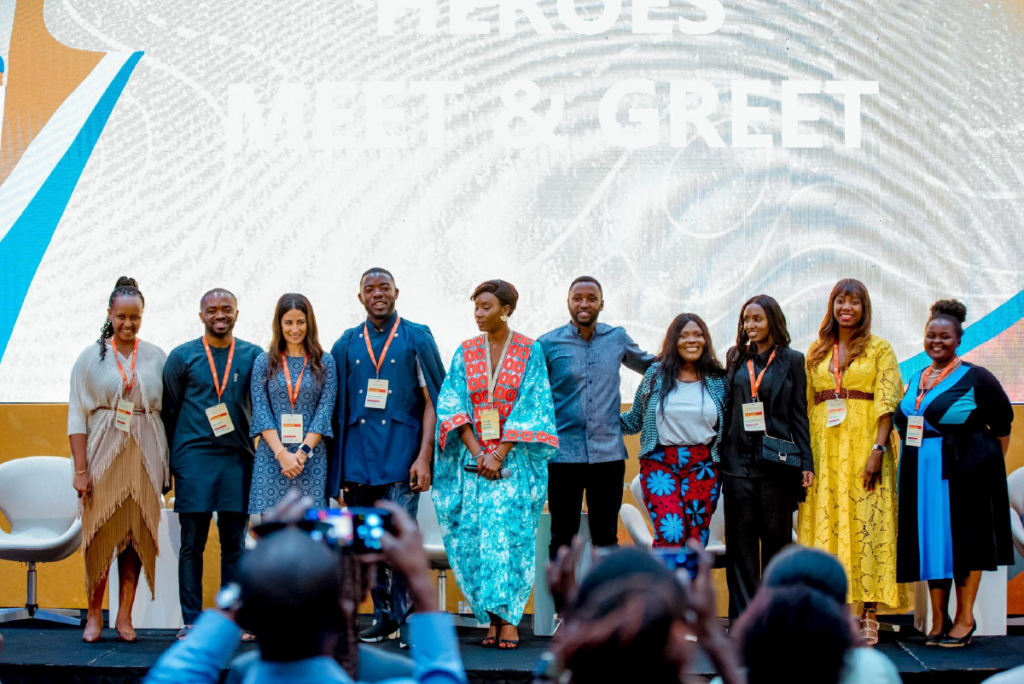
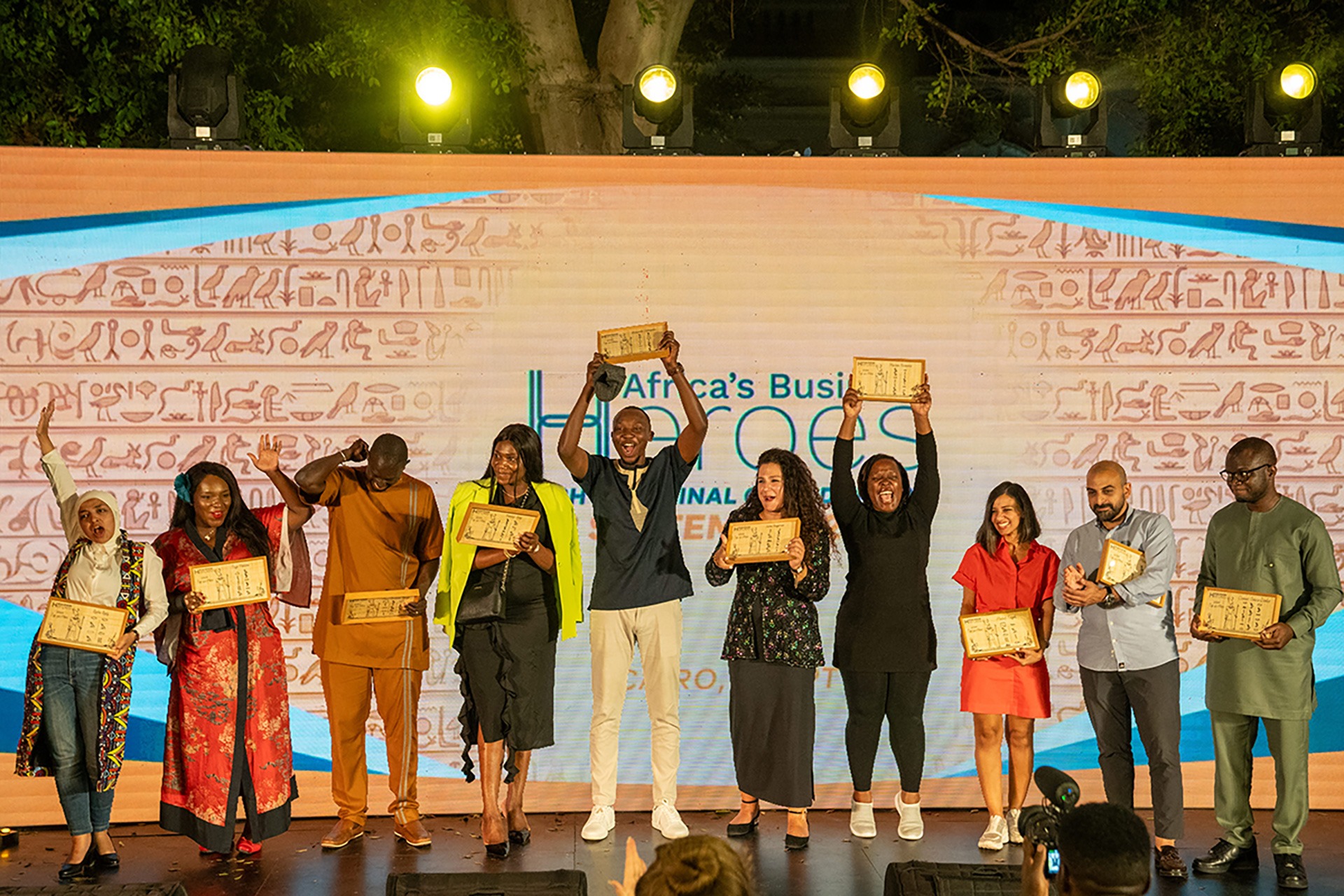
Image courtesy of Africa’s Business Heroes. Source: africabusinessheroes.org. All rights reserved.
Backed by Alibaba Philanthropy and the Jack Ma Foundation, Africa’s Business Heroes (ABH) is one of the largest and most prestigious entrepreneurship competitions on the continent. Now in its eighth edition in 2026, ABH runs under the theme “Defining Africa’s Future Today” and awards a total of $1.5 million in grant funding to ten finalists. The top prize winner receives $300,000, with the first and second runners-up receiving $250,000 and $150,000 respectively. The remaining seven finalists each receive $100,000. An additional $100,000 is allocated for global immersion training at Alibaba’s campus in Hangzhou, China. ABH targets established businesses with at least three years of traction across all sectors and all 54 African countries. Applications close in late April each year.
More information: africabusinessheroes.org
Tony Elumelu Foundation Entrepreneurship Programme
The Tony Elumelu Foundation (TEF) runs Africa’s largest entrepreneurship programme and has become a household name for early-stage African founders. Since 2015, TEF has invested over $100 million across more than 20,000 entrepreneurs in all 54 African countries. Each selected entrepreneur receives a $5,000 non-refundable seed grant, business training delivered through the TEFConnect online platform, one-on-one mentorship, and access to a global network of investors and partners. Applications typically open in the first quarter of each year. The programme is open to entrepreneurs at idea stage and early growth, with a preference for scalable, technology-enabled solutions.
More information: tefconnect.com
Africa Enterprise Challenge Fund (AECF)
Over sixteen years, AECF has supported 576 businesses in 26 Sub-Saharan African countries, impacted more than 36 million lives, created over 38,000 direct jobs, and leveraged $879 million in matching funds. It provides catalytic grants and interest-free loans ranging from $250,000 to $1.5 million per company, targeting businesses in sustainable agriculture, renewable energy, climate adaptation, and financial services. AECF runs competitive funding windows, and only for-profit private companies registered in Sub-Saharan Africa are eligible. The business idea must be innovative and the applicant must match at least the AECF contribution in cash or in-kind.
More information: aecfafrica.org
Africa Ecosystem Catalysts Facility (Village Capital + AECF)
A $4 million initiative backed by FMO (the Dutch Entrepreneurial Development Bank) and the Netherlands Enterprise Agency, the Africa Ecosystem Catalysts Facility supports startups in Ghana, Nigeria, and Tanzania. Led by Village Capital, it uses debt-like instruments that provide flexible capital aligned with each startup’s growth strategy, making it particularly relevant for founders who want to avoid equity dilution at the early stage.
More information: vilcap.com
Global Innovation Fund (GIF)
The Global Innovation Fund accepts applications on a rolling basis and supports high-impact solutions with funding between $50,000 and $15 million. It invests across proof-of-concept, pilot, and transition-to-scale stages and covers a broad range of sectors provided the solution addresses poverty or development challenges. Unlike many grant programmes, GIF uses a portfolio approach that includes both grants and concessional equity, giving founders some flexibility in how support is structured.
More information: globalinnovation.fund
African Development Bank (AfDB) SME Programmes
The African Development Bank runs multiple SME-focused facilities across the continent, often disbursed through partner financial institutions such as national development banks and commercial banks. In 2026, the AfDB approved a $200 million facility through Nigeria’s Bank of Industry specifically targeting SMEs, women entrepreneurs, and young business owners. Separately, the African Development Fund provides concessional loans, grants, and guarantees to low-income Regional Member Countries. Founders typically access these facilities through local partner banks rather than applying to the AfDB directly.
More information: afdb.org
IFC MSME Support Programs (International Finance Corporation)
The International Finance Corporation deploys capital across Africa through risk-sharing facilities with partner banks, targeting small and medium-sized businesses. Recent deployments include a $150 million initiative in Egypt allocating 20 percent to women-owned businesses, and a $10 million local-currency facility through Attijariwafa Bank with half earmarked for SMEs in vulnerable communities. Founders access IFC-backed lending through participating financial institutions in their country rather than through a direct application to IFC.
More information: ifc.org
GAFSP Business Investment Financing Track (BIFT)
Launched in 2024, the Global Agriculture and Food Security Program’s Business Investment Financing Track blends grants and concessional finance with multilateral development bank funding to catalyse private sector investment for smallholder farmers, producer groups, agribusinesses, and startups. A $14 million first allocation has been designed to unlock more than $200 million in private sector lending across Africa. Businesses in the agricultural value chain should monitor the GAFSP fund and AfDB channels for eligibility windows.
More information: gafspfund.org
Google for Startups Black Founders Fund: Africa
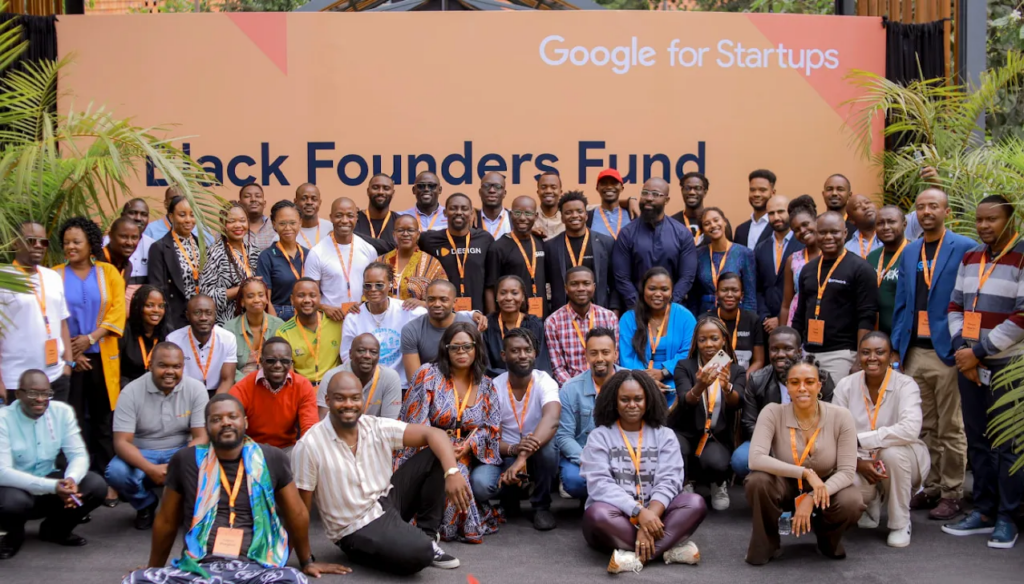
Image courtesy of Google for Startups. Source: startup.google.com/africa. All rights reserved.
Launched in 2021 and now in its fifth year, the Google for Startups Black Founders Fund supports early-stage Black-owned African tech startups with equity-free cash awards of $50,000 to $100,000 alongside Google cloud credits, mentorship, and platform support. To date the fund has supported over 220 startups across Africa, helping them raise $379 million and grow 61 percent faster than their peers. Applications typically open in January and close in March. Priority is given to startups with a live product in-market where technology is core to the ability to scale.
More information: startup.google.com/africa
Google for Startups Accelerator Africa
Separate from the Black Founders Fund, the Google for Startups Accelerator Africa is a cohort-based programme offering equity-free grants plus significant Google Cloud credits to tech and scalable startups across Africa. Cohorts typically run mid-year and cover multiple African countries. The accelerator is particularly valuable for founders who want hands-on technical mentorship from Google engineers in addition to capital.
More information: startup.google.com/africa
AWS Activate (Amazon Web Services)
AWS Activate provides startups with cloud computing credits of up to $100,000 to reduce infrastructure costs and accelerate product development. Applications are open year-round and the programme is particularly valuable for founders building cloud-native products or experimenting with AI and machine learning. For the highest credit tier, association with an AWS Activate Provider such as an accelerator or investor is typically required.
More information: aws.amazon.com/activate
Meta SME Grants (Facebook/Instagram for Business)
Meta periodically opens cash grants and advertising credit programmes for SMEs across Africa that are actively using Facebook and Instagram for business. These programmes run in cohorts and cover multiple African countries. The ad credits are particularly valuable for consumer-facing businesses looking to build digital marketing traction without significant upfront spending. Check Meta’s Business newsroom for open windows.
More information: facebook.com/business/grants
Seedstars Africa Ventures
Seedstars Africa Ventures invests in and supports early-stage technology startups across Africa through acceleration programmes, investment readiness support, and venture funding. Founders apply through Seedstars regional accelerator or competition calls. Seedstars is active in over 53 countries and runs country-level roadshows throughout the year leading up to an annual global summit.
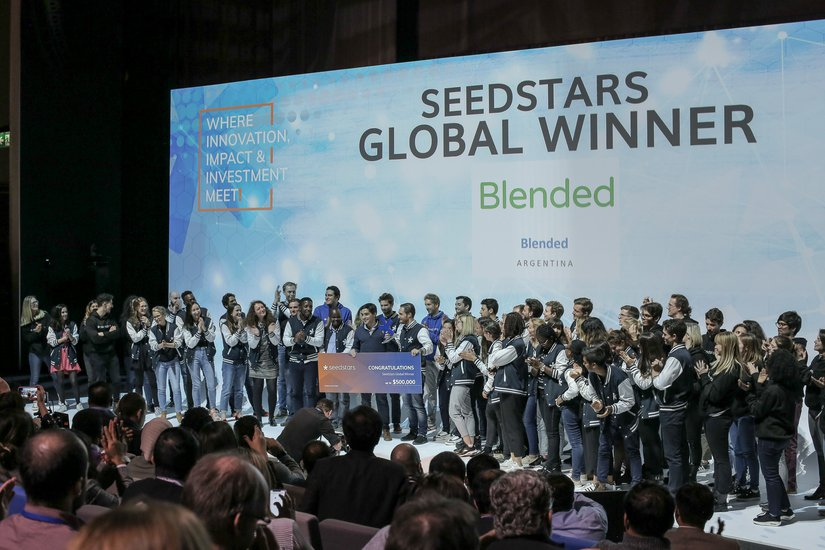
Image courtesy of Seedstars. Source: seedstars.com. All rights reserved.
More information: seedstars.com
Antler Africa
Antler Africa provides pre-seed investment to startup builders and runs two to three cohorts per year across Africa. It is particularly suited to early-stage founders who are still building their team and refining their product, as Antler invests in people and ideas at an early stage before product-market fit is fully established.
More information: antler.co
Africa Enterprise Challenge Fund — Agribusiness Windows
AECF’s agribusiness-focused funding windows provide grants and repayable grants to companies commercialising innovations that increase agricultural productivity, improve farmer incomes, or support rural supply chains. Grants range from $250,000 to $1.5 million and require a matching contribution from the applicant. AECF operates in 26 Sub-Saharan African countries with a strong presence in East and Southern Africa.
More information: aecfafrica.org
AGRA (Alliance for a Green Revolution in Africa)
AGRA provides grants and technical assistance for agribusiness and food systems ventures across sub-Saharan Africa. Funding windows open periodically and cover inputs, market access, processing, and smallholder-linked supply chains. AGRA is particularly active in East and West Africa and works closely with governments on enabling environment reforms that support agricultural SMEs.
More information: agra.org
GAFSP Business Investment Financing Track
As described in the Development Finance section, GAFSP’s BIFT is specifically designed to catalyse private investment in agribusiness, smallholder-linked enterprises, and food security startups. The $14 million first allocation is expected to unlock $200 million in private lending, with 1.5 million smallholder farmers expected to benefit. Businesses in the agricultural sector should monitor GAFSP and AfDB channels for upcoming eligibility windows.
More information: gafspfund.org
IsDB West Africa Women Rice Value Chain Programme
While covered in detail under the Women section, this $11.25 million Islamic Development Bank programme is also fundamentally an agribusiness intervention. It supports women entrepreneurs engaged in the rice value chain in Guinea, Niger, Senegal, and Sierra Leone through capacity development, grant matching, and improved access to local and regional markets. Agricultural SMEs run by women in these countries should apply.
More information: isdb.org
RAISEAfrica (RES4Africa Foundation)
Backed by Enel Green Power and the European Investment Bank, RAISEAfrica selects up to six African renewable energy entrepreneurs per cycle for structured acceleration, funding, and global ecosystem access. Each participant receives an entry contribution of €3,000 and competes for the Young Talent of the Year Award worth €5,000 to €10,000. Women-led energy businesses are a priority cohort. The programme runs annually and is particularly suited to entrepreneurs working on off-grid solutions, clean cooking, solar, and energy storage.
More information: res4africa.org
AECF REACT — Renewable Energy and Adaptation to Climate Technologies
The AECF’s REACT funding window specifically targets private sector companies developing and expanding clean energy technologies for Africa’s rural communities, including clean cooking solutions, solar PV, mini-grids, and productive-use energy technologies. Funded by the Swedish International Development Authority (SIDA) with a $42 million envelope, REACT operates in Kenya, Burkina Faso, Ethiopia, Liberia, Mali, Mozambique, and Zimbabwe.
More information: aecfafrica.org
Africa Ecosystem Catalysts Facility — Circular Economy Track
The AECF/Village Capital facility also runs a circular economy track supporting startups in agritech, food waste, textiles, recycling, and AI for circular economy. This is particularly relevant for founders building businesses that close resource loops or reduce environmental waste, especially in Ghana, Nigeria, and Tanzania.
More information: vilcap.com
Village Capital Africa Accelerators
Village Capital runs investment-readiness accelerators for African startups addressing social and environmental challenges in agriculture, climate, health, fintech, and education. Their peer-selected investment model — where cohort members evaluate and select each other for funding — is a distinguishing feature that rewards genuine peer validation over pitch-day performance.
More information: vilcap.com
Africa Grants Platform
Africa Grants is an aggregator platform that connects individuals, NGOs, and small businesses across Africa with funding from major grant organisations including USAID, UKAID, DFID, the AECF, and the Global Innovation Fund. Rather than offering its own fund, the platform manages applications on behalf of applicants and provides a regularly updated database of open funding windows. If you find it difficult to track individual programme cycles, this platform is a practical starting point.
More information: africa-grants.com
KBF Africa Prize (King Baudouin Foundation)
Every two years, the KBF Africa Prize rewards African-initiated and led organisations that contribute to sustainably improving the lives of people in Africa. It recognises initiatives that tackle challenges in transformative ways, are resilient and adaptable, and empower people to shape their own futures. Unlike competitive pitch-based programmes, KBF rewards proven long-term organisational impact.
More information: kbfafrica.org
AFAWA Women Entrepreneurship Enablers Grant
Separately from the main AFAWA facility, the AfDB runs periodic calls for proposals targeting women’s business associations, incubators, accelerators, cooperatives, and civil society organisations that support women-led SMEs in accessing finance. Grants of $100,000 to $250,000 are available to organisations that develop innovative capacity-building programmes enabling women entrepreneurs to access significant financing. Applications are open across all 54 African countries, with organisations in the Sahel region and North Africa strongly encouraged.
More information: afdb.org/afawa
Read: Top Funding Opportunities for Startups in Africa
AfDB/DBN Nigeria Women SME Package
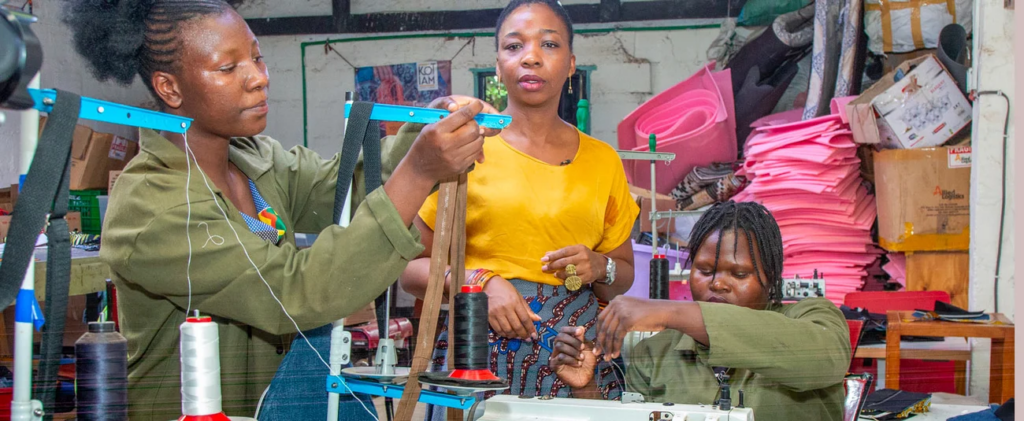
Image courtesy of African Development Bank. Source: devbankng.com. All rights reserved.
In April 2026, the African Development Bank approved a $61 million financing package for the Development Bank of Nigeria with more than 95 percent of the total earmarked for women-owned and women-led SMEs. The package includes a $50 million gender-focused line of credit, an $8 million concessional agri-food SME facility, and a $3 million AFAWA grant funded by the Women Entrepreneurs Finance Initiative (We-Fi). Nigerian women entrepreneurs can access this through DBN’s participating financial institution network.
More information: devbankng.com
We-Fi — Women Entrepreneurs Finance Initiative
We-Fi is a multilateral partnership hosted by the World Bank Group that has allocated over $353 million since 2018, supporting more than 200,000 women-led SMEs in 60 countries and mobilising $3.55 billion in additional public and private sector funds. In Africa, We-Fi works primarily through the AfDB, IFC, and Islamic Development Bank to deploy capital and provide non-financial support — including digital financial inclusion, access to markets, and capacity building — to women-owned businesses. Founders access We-Fi-backed facilities through participating banks and development finance intermediaries.
More information: we-fi.org
I&P Acceleration WE4A (Investisseurs & Partenaires)
Led by the pan-African impact investor Investisseurs & Partenaires (I&P), the WE4A Acceleration Programme finances and supports SMEs owned or co-owned and managed by women in green and transition sectors. The €3.5 million programme targets women-led businesses in Cameroon, Senegal, Togo, and Uganda, with a portfolio target of approximately 140 businesses. It operates three tracks: Investment Readiness, Debt Access, and Access to Capital. Grant funding is approximately $5,000 per entrepreneur, with larger debt and capital instruments available for qualifying ventures. Applications typically open in November.
More information: ietp.com/ip-acceleration-we4a
Tech FoundHER Africa Challenge (Naspers & Prosus)
Launched in September 2025, Tech FoundHER Africa Challenge was designed as an explicit break from equity-heavy models. Backed by Naspers and Prosus, it awards a total of $100,000 in equity-free grants to three outstanding women founders building technology or tech-enabled businesses in Africa. Beyond the capital, participants gain access to senior mentors within the Naspers-Prosus ecosystem, curated networking, and the opportunity to present at the Johannesburg Stock Exchange coinciding with Global Women’s Entrepreneurship Day. The programme is conducted in partnership with Lionesses of Africa. Applications open in September each year.
More information: prosus.com/techfoundher
Bayer Foundation Women Entrepreneurs Award
Now in its sixth year, the Bayer Foundation Women Entrepreneurs Award is a six-month global accelerator supporting 15 women founders per cycle from Africa, the Middle East, Asia, and Latin America. Each winner receives €25,000 in non-dilutive funding, a six-month investor readiness accelerator, a fully sponsored trip to the Award Ceremony in Amsterdam, and access to Impact Hub’s global network. The programme focuses specifically on health and food security solutions. Applications open in March each year; the 2026 cycle closed in April.
More information: bayerfoundation-wea.com
Flourish Africa Business and Life Skills Grant
Founded by Folorunso Alakija, Flourish Africa runs one of Nigeria’s largest women-focused business grant programmes, with a total fund of ₦1.3 billion over five years targeting at least 2,500 female-owned enterprises. The programme combines business and life skills training, one-on-one mentorship, and grant funding. Each year at least 500 women undergo intensive training, with top performers receiving grants of up to ₦3 million in the current edition (Cohort 5). Eligible women must own at least 51 percent of the business. Applications are open to women in Abuja, Lagos, and Port Harcourt.
More information: flourishafrica.com/grant
Access Bank W Initiative
The Access Bank W Initiative is a dedicated programme supporting female entrepreneurs across Africa with grant funding of up to $20,000 and comprehensive business advisory services. It is particularly active in Nigeria and other West African markets where Access Bank operates, and complements financial support with advisory services, mentoring from senior business professionals, market access support, and financial literacy training.
More information: accessbankplc.com/w-initiative
Visa She’s Next Grant Programme

Image courtesy of Visa She’s Next Grant Programme. Source: visa.com/shesnext. All rights reserved.
Visa’s She’s Next programme provides cash grants plus mentorship to women-owned businesses with a focus on helping women-led SMEs scale globally across trade, manufacturing, and services. Applications typically open in August to September each year and close in October. She’s Next is particularly suited to women running consumer-facing or export-oriented businesses who want to strengthen their digital payments and commerce capabilities.
More information: visa.com/shesnext
African Women’s Development Fund (AWDF)
AWDF is a pan-African grant-making institution that funds autonomous women’s organisations across the continent, with support going beyond grant-making to include capacity building, knowledge sharing, and movement building. It runs multiple grant windows throughout the year, including crisis response grants and strategic grants for women’s rights and economic empowerment. AWDF is one of the few purely African-led funders of women-led organisations on the continent.
More information: awdf.org
Africa Women Innovation & Entrepreneurship Forum (AWIEF) Awards
Since 2016, the AWIEF Awards have honoured women driving social and economic impact across eight award categories. Winners gain grants, high-visibility media exposure, and access to a pan-African network of investors, ecosystem leaders, and corporate partners. The awards are held annually, with applications typically opening in January and closing in March. AWIEF is particularly valuable for founders who want visibility alongside funding.
More information: awief.org/awards
She Leads Africa
She Leads Africa targets Nigerian and African women aged 18 to 35 with a programme that combines investment capital with media visibility and access to top business mentors. It is particularly strong on connecting women founders to investor networks and strategic partnerships and is well suited to founders building consumer-facing or digital businesses.
More information: sheleadsafrica.org
ShEquity
ShEquity is a VC firm that specifically provides equity investment to African female entrepreneurs and innovators at seed and early growth stage. It bridges the gap between grant funding and full venture capital, making it an important next step for women founders who have graduated from grant programmes and are ready to take on risk capital without giving up disproportionate ownership.
More information: shequity.com
How to Build a Stand-Out Application
With so many programmes available, the difference between businesses that receive funding and those that do not is rarely the quality of the idea. More often it comes down to preparation, presentation, and positioning. Here is what consistently separates successful applications from unsuccessful ones.
Be properly registered and documented
The vast majority of programmes require a registered business, a tax identification number, and basic financial records as a minimum. If your business is not yet formally registered, start there. Funders need to verify that the entity receiving money is legally constituted. This step alone disqualifies a significant number of applicants who never bother to check.
Know your numbers
You do not need audited financial statements at the seed stage, but you do need to know your revenue, costs, and unit economics. Funders want to see that you understand your business financially. Prepare a simple profit and loss summary, a twelve-month cash flow projection, and a clear articulation of how you will use the grant funds. Show that every dollar has a purpose.
Tell a clear impact story
Most of these programmes are not simply investing in businesses. They are investing in outcomes: jobs created, farmers served, women empowered, energy access expanded, food security improved. Frame your business in terms of the problem it solves and the measurable change it creates. Numbers help: how many people have you already reached, how many jobs have you created, what is your projected growth over the next two to three years.
Match the programme to your stage
Applying to a scale-up grant when your business is six months old, or to a seed grant when your business turns over $2 million a year, will not get you far. Read the eligibility criteria carefully and apply only to programmes that fit your current stage. A well-matched application to a smaller programme will nearly always outperform a poorly matched application to a prestigious one.
Apply early and apply often
Most grant cycles are competitive and oversubscribed. Early applications often receive more thorough review. More importantly, do not limit yourself to one application at a time. Map out the programmes relevant to your business, stagger your applications across the year, and treat each one as a learning process. Most businesses that successfully raise grant funding have applied multiple times before getting their first yes.
Build your application infrastructure once, reuse it everywhere
Across all these programmes, the core of a strong application is the same: a compelling business overview, a clear financial summary, a measurable impact narrative, and a practical use-of-funds plan. Build these once, at a high quality, and then adapt them for each programme’s specific questions and focus areas. This approach turns each new application from a major undertaking into a manageable task.
Follow up and stay connected
Many programmes have alumni networks, partner ecosystems, and community platforms. Even if you are not yet successful in securing a grant, staying connected to these ecosystems — attending events, engaging with programme staff, building relationships with alumni — puts you in a stronger position for future cycles and surfaces opportunities that are not always publicly advertised.