

If you can’t find your credit or debit card, it means one of two things: You either misplaced it or someone stole it. Either way, don’t let panic set in. Here’s what to do if your credit or debit card is lost.
1. Act Fast
When a debit card gets into the wrong hands, the impact is immediate. Every transaction pulls money directly from your bank account, so fraudulent charges can empty your balance before you even notice. This can affect your ability to pay for essentials like bills, transport, food, rent, or subscriptions.
Debit cards also have stricter liability rules. Your bank can refund fraudulent transactions, but only if you report them quickly. Waiting too long increases the amount you may be responsible for and in extreme cases, you could lose the money permanently.
Credit cards, on the other hand, are generally safer. Fraudulent charges affect your credit limit, not your personal cash, giving you time to dispute the charges before any real money leaves your pocket. But regardless of the card type, once something seems off, it’s important to act immediately.
2. Contact Your Bank Immediately
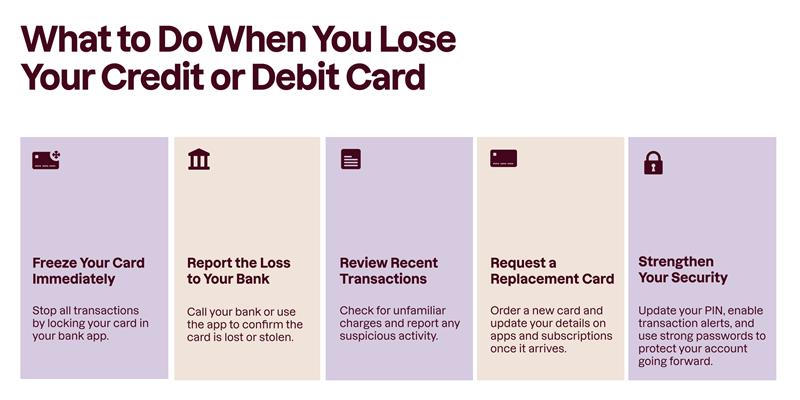
The most important step is to notify your bank as soon as you realise your card is missing or being used without your permission. This gives the bank a chance to block the card, stop further transactions, and guide you through the next steps.
You can reach your bank using the customer care number on their website or through the mobile banking app. Most banks have 24/7 lines for reporting lost or stolen cards so it is important to not wait until the next business day.
How your liability works:
- If you report the loss before any fraudulent transaction happens, you’re not responsible for anything.
- If you report within two business days of discovering the issue, your responsibility is limited.
- If you wait longer than that, and especially beyond 60 days, you could be held responsible for all losses.
If you still have your card physically but you notice fraudulent charges, it doesn’t make a difference, report it immediately. In many cases, your card number may have been stolen online through a merchant data breach, ATM skimmer, or phishing scam. The bank will still treat it as card fraud.
Some banks allow you to temporarily disable your card through their app. This can help if you’re not sure whether the card is lost or just misplaced. But if you can’t find it within a short time, request a replacement right away.
3. Credit Card vs. Debit Card: Which Is Safer?
While both cards carry risk, credit cards provide more protection when it comes to fraud.
Why credit cards are safer:
- Fraudulent charges do not affect your personal cash flow.
- Your legal liability is capped and often covered entirely by “zero liability” policies.
- You have time to dispute charges before paying the bill.
Why debit card fraud is more serious:
- Real money leaves your account instantly.
- You may struggle with daily expenses if your bank account is drained.
- You could be responsible for more of the loss if you delay reporting it.
Still, debit cards are safer than carrying cash. A stolen wallet with cash is gone forever. A debit card at least gives you a chance to recover the money if you act on time.
4. How Card Details Get Stolen Even When Your Card Is With You
It’s common for people to still have their card physically but see transactions they didn’t make. This usually means the card number — not the card — was stolen. It can happen through:
- Data breaches at stores or online platforms.
- ATM skimmers that read card information.
- Hidden cameras capturing your PIN while you type.
- Dishonest staff copying card details during a transaction.
To stay safe, use your debit card only with trusted merchants. For online purchases or unfamiliar stores, a credit card (or a prepaid card) offers better protection.
Also set up SMS or email alerts for every transaction. This helps you detect fraud early before it becomes a bigger problem.
5. Reduce Your Risk Going Forward
After replacing your lost card, take steps to prevent the issue from repeating:
- Save your bank’s customer care number somewhere safe and easily accessible.
- Monitor your transactions daily — mobile apps make this easy.
- Be mindful of where you use your card, especially online or at unfamiliar ATMs.
- Enable transaction alerts for instant updates.
Taking these small steps makes it easier to catch suspicious activity early and limit potential losses.
Losing your debit or credit card can feel overwhelming, but quick action is your strongest protection. The moment you notice your card is missing or your account shows strange activity, contact your bank and block the card. This limits your liability and stops further transactions. Remember that debit cards expose your actual money, so the longer you wait, the greater the risk. Stay alert by checking your account regularly, enabling transaction alerts, and being cautious about where you use your card. A few simple habits can prevent a lost card from turning into a major financial setback.